

Y Pwyllgor Cyllid - Y Chweched Senedd
Finance Committee - Sixth Senedd
29/01/2026Aelodau'r Pwyllgor a oedd yn bresennol
Committee Members in Attendance
| Mike Hedges | |
| Peredur Owen Griffiths | Cadeirydd y Pwyllgor |
| Committee Chair | |
| Rhianon Passmore | |
| Sam Rowlands | |
Y rhai eraill a oedd yn bresennol
Others in Attendance
| Adam Price | Aelod o'r Pwyllgor Cyfrifon Cyhoeddus a Gweinyddiaeth Gyhoeddus |
| Member of the Public Accounts and Public Administration Committee | |
| Catherine Mealing-Jones | Ymgeisydd a Ffafrir i fod yn Archwilydd Cyffredinol Cymru |
| Preferred Candidate for Auditor General for Wales | |
| Mark Isherwood | Aelod o'r Pwyllgor Cyfrifon Cyhoeddus a Gweinyddiaeth Gyhoeddus |
| Member of the Public Accounts and Public Administration Committee |
Swyddogion y Senedd a oedd yn bresennol
Senedd Officials in Attendance
| Ben Harris | Cynghorydd Cyfreithiol |
| Legal Adviser | |
| Mike Lewis | Dirprwy Glerc |
| Deputy Clerk | |
| Owain Roberts | Clerc |
| Clerk | |
| Owen Holzinger | Ymchwilydd |
| Researcher |
Cynnwys
Contents
Cofnodir y trafodion yn yr iaith y llefarwyd hwy ynddi yn y pwyllgor. Yn ogystal, cynhwysir trawsgrifiad o’r cyfieithu ar y pryd. Lle mae cyfranwyr wedi darparu cywiriadau i’w tystiolaeth, nodir y rheini yn y trawsgrifiad.
The proceedings are reported in the language in which they were spoken in the committee. In addition, a transcription of the simultaneous interpretation is included. Where contributors have supplied corrections to their evidence, these are noted in the transcript.
Cyfarfu’r pwyllgor yn y Senedd a thrwy gynhadledd fideo.
Dechreuodd y cyfarfod am 09:30.
The committee met in the Senedd and by video-conference.
The meeting began at 09:30.
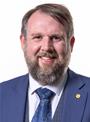
Croeso cynnes i chi i'r cyfarfod yma o'r Pwyllgor Cyllid. Mae'r cyfarfod yma'n ddwyieithog, ac felly mae cyfieithu ar y pryd ar gael. Fedraf i jest checio a oes gan unrhyw un unrhyw fuddiannau i'w nodi? Na, dim byd. Mae Rhianon Passmore yn rhedeg yn hwyr, felly rydyn ni'n gobeithio y bydd hi'n ymuno efo ni'n hwyrach, a dwi'n gwybod bod Adam Price yn mynd i fod yn gadael ychydig yn gynnar hefyd. Felly, rydyn ni'n ymwybodol o hynny ac yn derbyn yr ymddiheuriadau hynny. Dwi hefyd yn croesawu aelodau o'r Pwyllgor Cyfrifon Cyhoeddus a Gweinyddiaeth Gyhoeddus sydd, o dan Reol Sefydlog 17.49, wedi cael gwahoddiad i fynychu ar gyfer eitemau agenda 3 a 5, mewn perthynas â'r gwrandawiad cyn enwebu ar gyfer Archwilydd Cyffredinol Cymru. Felly, croeso cynnes i chi yma hefyd, fel Aelodau, ac mi fyddwch chi'n cymryd rhan ac yn holi cwestiynau yn ystod eitem 3.
Welcome to this meeting of the Finance Committee. This meeting is bilingual and interpretation is available for this meeting. Could I just check whether any Members have any interests to declare? No, I see that they don't. Rhianon Passmore is running late this morning, so we hope that she will join us in due course, and I know that Adam Price will be leaving a little bit early. So, we're aware of that and we accept those apologies. I also welcome members of the Public Accounts and Public Administration Committee who, under Standing Order 17.49, have been invited to attend for agenda items 3 and 5, specifically in relation to the pre-nomination hearing for the Auditor General for Wales. So, a warm welcome to you all, as Members, and you'll be taking part and asking questions during item 3.
Felly, fe wnawn ni symud at eitem 2, sef papurau i'w nodi. Ydy pawb yn hapus i nodi'r papurau hynny? Ydyn, dwi'n gweld pobl yn nodio. Diolch yn fawr, ac fe wnawn ni symud ymlaen at eitem 3.
So, we'll move on to item 2, which is the papers to note. Is everyone happy to note those papers? I see that they are, by nodding. Thank you very much for that, and we'll move on to item 3.
This is our substantive item for this morning. It's the pre-nomination hearing for the Auditor General for Wales. We have our preferred candidate with us, Catherine Mealing-Jones, and welcome to you here. As Members will be aware, the term of the current Auditor General for Wales, Adrian Crompton, will end on 20 July this year, and this committee is responsible for advising the Senedd regarding the nomination of the next auditor general. The task was delegated by the committee to a panel comprising of me, Mark Isherwood, along with Lynn Pamment, Comptroller and Auditor General for Jersey, and chair of the Audit Wales board, Dr Ian Rees. We advertised the role back in September and received a very strong field of applicants, with interviews held earlier this month. The panel unanimously agreed that Catherine Mealing-Jones was the preferred candidate. I welcome you here today. This pre-nomination hearing allows Members to address any questions to the candidate with a view to confirming suitability for the appointment.
So, without further ado, I'd like to start with a very broad question, I suppose, to start off with. Could you outline the main reasons why you applied for the role and the key experiences and knowledge that will aid you as the Auditor General for Wales?

Diolch yn fawr. Bore da, pawb.
Thank you very much. Good morning, everyone.
I think it's a unique role, so when it was brought to my attention, I looked at it really closely. I think it offers an opportunity to take a unique strategic overview about what's happening in Wales. I think Wales particularly, and the public sector generally, is at a significant inflection point with political change, macro-economic change, and real challenges in the public sector and in terms of the delivery of public services—so, real challenges, real opportunities.
I think the opportunity, then, as auditor general and with the Welsh audit office, to play a role in enabling Wales to reach its potential, to deliver public services that the public can have real trust in, and to play a part in developing that trust in the services, but also leading to significant improvements, hopefully, in tackling some of the strategic issues that there are, is just a great opportunity. So, obviously, I looked at myself pretty hard to see whether I thought I had the skills and experience to make an application for the role, and I believe I have, certainly in recent years, come to understand a lot more about how public services operate in Wales as chief executive of a national park authority. Yes, it's a small authority, but, where we are situated, we interact with a significant range of other parts of the sector, so nine local authorities, a number of public services boards, corporate joint committees and so on, so a really good opportunity to have an overview there.
I have experience, therefore, as a chief executive and accounting officer in leading staff in a public body. And then, looking back at my other experience, I've worked very closely with politicians in Whitehall, I've been a leader of significant change in large public sector institutions, I've delivered technology-enabled change, I've used my skills and experience to develop policy, and also worked very closely with a number of other sectors. So, in my role in the space agency, I worked closely with the research base, with industry and so on. I also have experience of working internationally in gathering best practice in terms of how I do my role. I'm a chartered public finance accountant, and have a number of other skills and experience that I think I could bring to bear. I don't think this is a role to be taken at all lightly, but, with the support of the office, I hope I can bring my skills and experiences, together with the weight of the office, to do a good job on behalf of the people of Wales.
Thank you very much for that. What do you see as your early priorities, then? You're through the appointment process now, as we come to the end of that, and what do you see as your main objectives and, as you've touched on a few of the challenges in your first answer, some of those challenges of the role as well? So, if you lay out what you hope to achieve, I suppose.
Well, early priorities, obviously, job No. 1 is to really get familiar with the office. I'm very conscious that in the Wales audit office, there are highly experienced and qualified staff who I can learn a lot from and whose advice and support I'll be very reliant on during my time in the role. So, I would want to understand immediately the issues that we're facing across the office and really get to grips with how things work in the office.
I think the other significant early priority is forming those relationships with the Chairs of the committees—the Finance Committee, the public accounts and administration committee, and the other committees of the Senedd too—to start to understand what the pipeline of issues are there. Obviously, Adrian, as the auditor general at the moment, will be there for that transition, post Senedd elections and so on, so I'm hoping that I'll have the opportunity for a really good handover with Adrian so I can get to grips with the issues. We'll be in a situation where it'll be budget setting and so on almost as soon as I came into post, if I was successful, so I'd want to engage with that. So, relationship forming, both internally and particularly with key parts of the Senedd, I think would be my highest priority.
And then, longer term, I guess, I always look at jobs in terms of, 'What would people say about her? What did she do in that job?', when you've left, and I would hope that we would be able to play our part, or I would play my part both in the auditor general role and as the leader of the office, in enabling the delivery of excellent public services that people can have real trust in. So, I think really developing the office so that both the bodies we audit and the public who rely on those services can see the value that we're adding. I'd like to develop, more along the lines of the National Audit Office, some metrics that people can really understand, in terms of the money that's invested in the work that we do, what that brings in terms of public sector improvement and benefit. I know we have some of those key performance indicators already, but to start to develop those.
And I'd really like to develop in a couple of other areas, I think, particularly audit follow-through and best practice so that we're really tracking what's happening; using our convening power to support the public service in the skills and experience it needs to deliver in a very challenging environment; and then, particularly, the changes that are going to be required to really put climate and nature at the heart of what we're doing, really bring the sustainable development principle into the heart of how budgets are set and how work is delivered, playing a role in really supporting the vision for that and how that's going to be enacted over the next eight years.
You talked there about the, 'What would they say about me after I'd left?' aspect. Well, as Adrian leaves, Adrian has his own style, and you have your own style. But what could the public sector expect from you as you go into the role? What's going to be, I suppose, that transition period and that change? What's that going to look like for the public sector in Wales? Obviously, you'll be at the top of an organisation that would be touching on a lot of different bodies across Wales, and what could they expect from you as the auditor general?
Obviously, I would be lucky if confirmed in the role to be following on from Adrian, who's obviously built an excellent reputation for the office and for the role. You can see that in the responses that stakeholders give to the value that the office adds. So, I'd really want to be building on that.
What can people expect? I mean, I will absolutely do my best to understand the sector. There are parts of the Welsh public sector that I currently understand better than others. So, I'd quickly want to really understand the issues. I think they can expect fairness, proportionality from me, but also an independent mindset and to only look at the things that I should be looking at and to follow the public interest, to look at the issues that matter to the public in terms of delivery and that are going to support the public sector in being more productive, doing more with less, tackling some of the challenges that we're all facing as public service leaders—financial sustainability, workforce capacity and how to really leverage technology to help us in our roles, plus these issues about how we start to account differently for natural capital that Wales undoubtedly has. So, you know, it's a time of profound change and challenge. I would hope that people will see me there as an independent, supportive partner in improvement.

Bore da. Good morning. You described the element of the role as leader of the office and leading staff. Could you describe for the committee's benefit what that means in practice for you, and how you approach staff leadership and development?
Yes. I think how I approach it is very much as an engaged leader, as a leader with a clear sense of vision about the organisation, but always open to the ideas of colleagues, particularly, I think in this role and some of the other roles I've had, and as we look to the future, we'll increasingly need different types of specialists, so really understanding how to bring those specialist skills to bear and using those to continue to shape the vision and the way forward. But also I think important in this role is to be able to identify, if you like, those issues that are kind of coming up on the rails, the things that we need to be mindful of.
I think the culture of an organisation is really important to me. I understand that the culture across Audit Wales is really positive. The staff survey results are excellent. I would really want to continue with that kind of engaged, involved leadership style.
In terms of performance management structures, what does that mean for you?
It means honest conversations and real support for people's learning and development. Again, I think that's something that's really important in this role in terms of leading the office and, yes, encouraging everybody in their management and leadership roles to lead the office effectively.
I've got one very short final question, following on from the last time we met you: what do you believe is the role of appraisal? Is it part of a process or is it an annual event?
No, it's absolutely part of a process and it's a real opportunity for managers and the whole organisation in a very personal way to connect the work that they're doing every day with the purpose of the organisation, and to receive and offer feedback about how to improve things in the organisation. So, it's a living day-to-day process that managers need to engage with all the way through the organisation.
Thank you.
I'll bring Mike Hedges in, please. Diolch, Mike.

Diolch, Cadeirydd. As auditor general, you are likely to find yourself in situations where you have to tell powerful individuals uncomfortable truths. Your predecessor, or the current auditor general, produced a qualified audit on the Welsh Government. What is your experience of working with senior public figures and elected representatives, and, as auditor general, how would you look to manage and build relationships while maintaining your independence?
Diolch. Yes, I think a key part of this role is, clearly, having sometimes difficult conversations about some of the outcomes of audits, but maintaining constructive relationships in terms of what we're all looking for in the future in terms of public sector delivery. I have worked very closely with senior Ministers in previous roles. It isn't easy, speaking difficult truths to people who are in power and where there are situations where there are strong political imperatives to get things done. Far harder, though, is not to speak those truths and to let a situation develop that could have been addressed in another way.
As an example, in some of the work that I was doing as part of the development of Border Force, my team and I were working very closely to a political imperative to get a certain number of pieces of technology in at the border for 24/7 real-time operation. Telling the Home Secretary that something isn't possible was a difficult challenge. And equally, I've worked very closely with senior Ministers in their private offices and so on—it isn't easy. I think it's all about how you do it and how you form the relationships, and I think really investing in relationships so that you're talking about what's going well, as well as what perhaps is going not so well and so on, so that when you do need to deliver difficult messages, you can do those in a trusted way.
In terms of maintaining independence, I think it's something that I'm going to have to pay really close attention to. I'm an independent-minded person, so hopefully it will come reasonably naturally to me. Again, this is where I'd look to the support of my senior team and my board at the Welsh audit office to really support me in the line that I'm taking on some of these issues, so that I can make sure that I'm taking an independent mindset into those discussions.
Thank you very much. You're coming from an organisation that the auditor general audits. How would you ensure independence and fairness in dealing with that organisation? And more importantly, how will you avoid any perception that you're not showing independence and fairness in dealing with that organisation? There'll be matters that will come up in the near future in which you have been involved as chief executive of Bannau Brycheiniog national park. Put simply, how are you going to make sure that people feel that you're treating them, where you used to work, the same as everyone else?
Diolch. I think, coming to the Bannau Brycheiniog point first, were I to be successful, following nomination, I would need to completely step away from any decision making in the new role that was in any way associated with Bannau. I would delegate that to a member of my senior team in terms of any of the performance audit or, indeed, the finance audit work.
I think I would also have to look really carefully at the work that I've done with other bodies in Wales, particularly, perhaps, the other two national parks, which I've worked with very closely. Again, I don't see that I could involve myself personally in anything that was associated with those two bodies. Hopefully, step 1 is transparently explaining or clearly not associating myself with things where there's a clear conflict of interest.
In terms of the longer term, I think some of it's about the stance I take with dealing with other public bodies, the independence of the audits. I think the audit assurance process is really important and I think it's definitely something to be on my guard about, having worked closely with a number of public sector bodies. But I think it is possible, through the independence of the role, to ensure that there aren't any conflicts between my independent opinions, formed by the work done by my office, and my own views about any past experience with organisations.
Historically, the auditor general's only role was auditing public bodies. It's expanded a lot from that, but that's what it used to be. And it's still a major part of the role of auditor general. What experience do you have in public sector audits and the requirements for them?
Sorry, I didn't catch the last bit. The required—?
The requirements as to what you expect to come out of the public sector audits. If I put it simply, there is the soft-touch approach where internal audit works incredibly well and all you're doing is checking the internal auditors' work, and others where the organisation's internal audit has got problems so you have to go into greater detail and greater investigation into those organisations.
Thank you. In terms of my experience of public sector audit, my primary experience is as a board member and, obviously, latterly, chief executive of an organisation that is audited by Audit Wales, and then in past organisations by other independent external auditors. Obviously, the role of external audit is somewhat different. It's independent, it's giving assurance much more broadly. Internal audit is much more about recommendations to management and it is a programme that is developed by the internal organisation, and usually those two bodies are quite separate. I've also experienced external audit as a non-executive leader as well. So, yes, I think I understand the difference and the importance of external audit focusing on issues that, perhaps, are a bit different—maybe public interest issues, issues coming out of financial management—and that they are useful to the public and in terms of transparency, versus internal audit, where you're focusing on things that management are looking for to improve the running of the organisation. I hope that that addresses your question.
Yes, it does. I think it is a question that has to be asked.
Diolch, Mike. I'll come over to Adam.
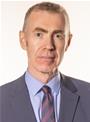
Diolch yn fawr, Cadeirydd, a bore da i chi. Gaf i aros gyda'r cwestiwn yma o brofiad o gyfrifo o fewn y sector cyhoeddus? Yn ei araith yn ddiweddar ar gyfrifon llywodraeth leol, nododd archwilydd cyffredinol presennol Cymru bod dim ond 56 y cant o gyrff yn y sector yna wedi cyrraedd terfyn amser Llywodraeth Cymru ar gyfer cyfrifon 2024-25. Dwi'n nodi o ran Awdurdod Parc Cenedlaethol Bannau Brycheiniog, er enghraifft, fe gyhoeddoch chi hysbysiad oedi yn dweud na fyddai'r datganiad o gyfrifon ar gyfer 2024-25 yn cael ei lofnodi erbyn y terfyn statudol, sef diwedd Mai. Wedyn, gwnaethoch chi osod targed estynedig o ddiwedd Awst, ond yn y pen draw, llofnodwyd y cyfrifon dim ond ar 10 Rhagfyr, a chwblhawyd yr archwiliad ar y diwrnod canlynol. Beth aeth o'i le yn union o ran yr oedi hynny, a pha wersi penodol ydych chi wedi eu dysgu o'r broses yna?
Thank you, Chair, and good morning to you. Could I just stay with this question of auditing experience within the public sector? In a speech recently on the accounts of local authorities, the current Auditor General for Wales noted that only 56 per cent of bodies in that sector had reached the deadline set by the Welsh Government in terms of the accounts for 2024-25. I note in terms of the Bannau Brycheiniog National Park Authority that you announced a delay notice saying that the statement of accounts for 2024-25 would not be signed by the statutory deadline, namely the end of May. Then, you set an extended target of the end of August, but ultimately the accounts were signed only on 10 December, and the audit was completed the following day. So, what went wrong exactly in terms of that delay, and what specific lessons have you learned as a result of that process?
Diolch. Yes, absolutely, it's been a challenge in terms of the cycle of annual audit versus budget setting for Bannau Brycheiniog National Park Authority. We were caught in a lot of the backlog that Audit Wales had in terms of auditing accounts. So, it's a bit of a chicken-and-egg thing, where because we knew that we were going to be later in the programme for Audit Wales from the previous year, the accounts had been audited late, which meant that the very small finance team were fully occupied dealing with that and then budget setting for the following year, and you get this knock-on effect. And we had quite a significant backlog on the Audit Wales performance audit for my organisation as well.
The lesson learned for Bannau Brycheiniog is about trying to tackle the challenges of workforce. It's been very difficult to secure good-quality finance staff. I've got an excellent team, but it's a challenge, in terms of having a small team running an organisation that is—. We're not a complex organisation compared with a large local authority, but once the finance audit gets started, it's very all-consuming, not just for that team, but for the whole organisation in terms of answering the queries. So, really, the lesson learned for us is to get on with it, to work very closely with Audit Wales in terms of the timetabling. And we've been pushing for earlier timetabling of the audit, so that we can bring everything forward.
And then, in terms of the new role, I think it's kind of not dissimilar. It's really getting to grips with the programming, making sure that we are supporting organisations in terms of really clear messages about the importance of getting audits done, and preparing accounts so that they're ready for audit. I know from personal experience that it gets very difficult when you're audited late to look back at the statements that you need to make, and the position at year end, which can be up to nine or 10 months in the past. I don't think that helps with public transparency around how you're spending public money, and also some of the impact that you're having with that money. So, there are some lessons learned. I know Audit Wales have done a lot of work to catch up with the backlogs, so, hopefully, that will be less of a problem.
I think the bigger lesson learned in terms of the local authority sector, and perhaps other sectors, is to really work closely with them in terms of the benefits of getting accounts ready for audit, so that we can crack on with the audit programme and be as close as possible to the deadlines for publication and then audit.
Mae’r amseroldeb wedi bod yn gwaethygu—dwi’n credu fy mod i’n gywir yn dweud hynny—dros y blynyddoedd diwethaf. I ba raddau y gallwch chi roi sicrwydd i’r pwyllgor ar sail yr hyn rŷch chi newydd ei ddweud? Ydych chi’n credu y bydd modd cynnal safonau amseroldeb mwy cadarn yn ystod y blynyddoedd i ddod, am y rheswm rŷch chi newydd ei ddweud, sydd yn ategu beth oedd yr archwilydd wedi dweud, bod amseroldeb yn rhan bwysig o sicrhau tryloywder ac atebolrwydd?
The timeliness has been deteriorating—I think I'm right to say that—over recent years. To what extent can you give the committee assurance on the basis of what you've just said? Do you think that it will be possible to maintain more robust timeliness standards over the years to come, for the reasons that you've just outlined, which supplements what the auditor general said, namely that timeliness is an important part of ensuring transparency and accountability?
In terms of assurance, the assurance I can give you is that, if I'm to be successful in the role, it would be an absolute priority to try and work closely with the sector to close that gap and make sure that that timeliness is delivered. Again, this is where, if I'm able to come into the role, I would want to work very closely with the parts of the organisation who work most closely with the local authority sector, to really try to understand what some of the issues are. And, obviously, with the sector, likewise, to understand what those issues are in terms of timeliness of accounts and so on. I don't know if many local authorities have similar issues in terms of workforce and people being prioritised elsewhere. There will be a series of, I'm sure, systemic challenges that need to be tackled. My assurance would be that I would try and work as much as I can in the role to try and address those issues.
Diolch yn fawr. Mae archwilio yn hanfodol i ddiogelu arian cyhoeddus a hyder y cyhoedd. Ond mae Cymru hefyd angen mwy o arbrofi a chynlluniau peilot i wella gwasanaethau a chynyddu cynhyrchiant. Fel archwilydd cyffredinol, sut fyddech chi’n sicrhau bod archwilio yn galluogi arloesi—gan dderbyn y gall rhai cynlluniau arbrofol, cynlluniau peilot, fethu—cyn belled â bod dal modd sicrhau, wedyn, llywodraethu a gwerthuso’n gadarn, yn hytrach na meithrin diwylliant o osgoi risg oherwydd ofn ynglŷn â system archwilio sydd yn rhy llym ei beirniadaeth o unrhyw arloesedd?
Thank you very much. Auditing is vital in safeguarding public money and the public's trust. But Wales also need more experimentation and pilot schemes to improve services and to increase productivity. As auditor general, how would you ensure that auditing facilitates innovation—accepting that some experimental schemes, pilot schemes, can fail—as long as it's still possible to ensure robust governance, rather than fostering a culture of avoiding risk because of a fear of an audit system that is too strict in its criticism of any kind of innovation?
I think it's a really interesting question in terms of how to harness innovation, of whatever kind, and pilot and try things, and be in a situation where you can swiftly evaluate whether something's likely to be successful or not. In terms of how audit can support that, I think some of that's about our work away from the sector and with other auditors, to make sure that, as standards develop around some of these areas, we're playing our part and bringing our learning from the Welsh experience into that context.
I think, as you say, governance around innovation is really important: robust governance in terms of ensuring that criteria are set right at the outset, so that innovation is not done for innovation's sake, but is done with very clear benefit in mind in terms of productivity improvement, public sector delivery, whatever that is, and that there are strong programmatic controls on how innovation is piloted and used, and how best practice from innovation is shared. So, I think audit can support that in terms of focusing on some of those areas. I think it can also support that in terms of thinking about budget setting, and then it's about the standards that are brought to bear.
And, again, looking at potentially my tenure in the role, I'm sure when Adrian sat here eight years ago, he probably wouldn't have foreseen much of what happened—COVID being a huge curveball. But I think as much as possible, my thoughts about the office are that that part of the organisation—I can't remember what they call it, but the part that's focused on future developments and so on—will be a really important part of the office's work, and will need to grow, given the scale of some of the challenges. Enhancing innovation is going to be crucial, and our support for that is going to be a key part of our success over the next period.
Ydy methiant o fewn terfynau fframwaith gwerthuso cadarn yn rhan annatod o'r broses o arloesi a dysgu?
Is failure within the confines of a robust evaluation framework an inalienable part of the innovation process and the process of learning?
I would have to say, 'Yes, I think it is.' I'll draw on my experience from the space sector, where there are some pretty catastrophic failures prior to success. The key thing—it sounds trite to say, but the key thing is about anticipating what could go wrong, understanding the parameters, and quickly either cancelling or reforming the programme that you're trying to deliver. So, yes, I think it is, and I think it's very difficult for public sector leaders in the current environment and in the political sphere. I think failure is a difficult thing to talk about, but I think you can have something that is a constructive failure, and as long as you learn from it and it leads to ultimate success, I think it's a key part of the innovation process.
Iawn, diolch. Gan fod Archwilydd Cyffredinol Cymru yn brif weithredwr Archwilio Cymru, ac yn gweithio o fewn trefniadau llywodraethu sefydledig, beth yw eich cynllun i feithrin perthynas waith effeithiol gyda chadeirydd a bwrdd Archwilio Cymru, yr uwch dîm a'r staff ar draws y sefydliad?
Thank you very much. Given that the Auditor General for Wales is the chief executive of Audit Wales, and works within established governance structures, what is your plan to nurture an effective working relationship with the chair and board of Audit Wales, the senior team and staff throughout the organisation?
Thank you. Yes, those relationships are going to be absolutely crucial to our effectiveness and impact, and also to my experience in the role. I think the relationship with the chair particularly is really important. I'm pleased to say that I've had the opportunity to talk to Ian about the role in future, if I were in a position to take it forward, so that constructive relationship building has started already. As I said in reply to an earlier question, that would just be a huge priority. Respecting the experience and views of the whole team, but working closely and effectively with the senior team, who have vast experience of the different parts of the role, will be absolutely vital, and inspiring and maintaining the confidence of the whole office will rely on my personal relationships and my ability to engage with, lead, listen to and, at times, challenge back all of those parts of the organisation. So, it will be something to which I'll pay very close attention, if successful.
Mae Archwilio Cymru yn sefydliad mwy, dwi'n credu, na'r awdurdod rydych chi'n ei arwain ar hyn o bryd—tua 300 o staff. Pa heriau mae'r newid hwn mewn maint a chymhlethdod yn ei greu i chi, a sut byddech chi'n eu rheoli?
Audit Wales is a larger organisation, I think, than the authority that you lead at present—about 300 staff members. What challenges does this change in scale and complexity create for you, and how would you manage those challenges?
Diolch. Yes, I think the whole role is a significant and wide-ranging role, which, as I said earlier, is not something I would take on lightly. I am used, in my career, to moving into different sectors, and that's something that I find very stimulating and interesting in terms of my personal development, but also getting to grips with new issues. I believe that I've done that successfully across a range of sectors, so I will bring that to bear.
In terms of the scale of the organisation, I think, again, it's a larger role, but it also has a larger senior leadership team to support me in that role, so I'll be drawing heavily on their experience. I do have experience of leading larger teams than the one that I lead at Bannau in previous roles, albeit as a director rather than as a chief executive, and also, particularly in the Border Force example, of being in a position where I've had to lead across a much bigger organisation. So, you know, 8,000 people in the Border Force, although not directly in my responsibility, I absolutely had to engage with them and effect change through them. I would never approach it in any kind of arrogant way. I think you've always got to go humbly and recognise what you've got to learn in a new role, but I do believe I've got some good experience to draw on, and there is in place an excellent team whose experience I'll be relying on very heavily, particularly at the start of my role, if I'm able to take it up.
Yn olaf gen i, Cadeirydd, felly, rydych chi wedi cyffwrdd â'r cwestiwn yn barod o'r trosglwyddiad, yr handover, o un archwilydd i'r un newydd, ond fel corff hefyd mae gan Archwilio Cymru amryw o strategaethau a rhaglenni eisoes ar y gweill. Felly, sut ydych chi'n mynd i falanso—sut gallaf ei ddweud—yr angen i gael parhad a dal i adeiladu ar y gwaith sydd eisoes ar y gweill, ac wedyn y cyfle i roi eich stamp eich hun, mewn ffordd, ar y rhaglen waith?
And finally from me, Chair, you touched upon the question already of the handover from one auditor general to the next, but as a body as well Audit Wales has a variety of strategies and programmes that are already in place. So, how are you going to balance—how could I say it—the need to have continuity and continue to build on the work that's already being done, and then the opportunity to put your own stamp, in a way, on the programme of work?
Diolch. I think it's quite an organic process, in a way. I very much hope that, if I'm able to, I would be able to have a good handover with Adrian, with the team and with the board, so that I can really start to understand some of the issues. I think there are quite a few things already in train in Audit Wales that are in tune with my, let's face it, early thoughts about what some of the priorities would be and how I would wish to shape the role. And, of course, following the Senedd elections, there's almost a natural point there with the potential for change, and new committee Chairs, potentially, to form those relationships and start to form my ideas. Obviously, I'll come into business planning and a cycle, as you say, where there are things already there, and then I think it's a question of forming my views with the best information I've got and introducing those in a sensitive and appropriate way.
What I wouldn't do is a handbrake turn the minute I got into role. I'm very mindful of the fact that there is a need to still project that kind of relevance and authority of the role, but also then subtly to move into a different gear, as I hit my stride as the leader of the organisation and as the auditor general. And that's something I would feel my way through, I think.
Ocê. Diolch yn fawr.
Okay. Thank you very much.
Diolch, Adam. Sam.

Thanks, Chair. And thanks for your responses so far to the questions. I just want to build on a question that Adam Price asked you when he pointed towards perhaps some of the challenges around the backlog and perhaps the timeliness of reporting. I wonder whether you'd considered what practically could be done to increase either capacity or capability within something like the Audit Wales office.
Yes, I have thought about that. Initial thoughts—and I'm very conscious that I haven't got into the organisation to see what things are like on the ground. A lot's gone into trying to get to grips with those backlogs, and I understand that's got some other consequences in terms of fees and so on. I think that issue about workforce capacity development is going to be something that we'll really have to grapple with over the next few years, if I am able to take up the role.
The battle for public sector talent and finance, and particularly audit and other experience, is going to be quite intense. I suppose I've thought about it more in terms of our role as the incubation space for good people coming through who are going to take up positions across the rest of the audited bodies, and how we really retain those skills, which I think will be a real challenge.
So, yes, I would want to get into the KPIs around how we understand our backlogs, work with the board to understand the challenge that they've made around the backlogs, and delivery of the work programmes and so on. I'd look at the feedback that comes from the audited bodies and their experiences. I'm keen that we continue to build on the work on tracking responses and the follow through from audits and all of that side of things. I think, if I can answer your question in terms of my concerns about workforce—and I think that's a concern across the public sector—that's something that I'll have to pay really close attention to.
Okay. Then, in terms of creating capacity through better use of technology—I noted your experience previously with Border Force, but it looks as though that was close to 15 years ago, and technology has leapt and bound since then—it strikes me that some of the nuts and bolts of the roles of audit can probably be picked up much more through artificial intelligence and other technologies these days.
Yes.
Have you considered how that can create capacity?
Yes. Indeed, in a very limited way, we've been looking at it in my current role as well. I think AI is the thing of the moment, isn't it? It's the technology in the box that, once it's out, putting the lid back on is pretty difficult. I'm also very conscious that we've seen some high-profile examples of where, if we don't do it carefully, it can be very challenging for an organisation, and also crucially for public trust in the delivery of public services.
I think this is where, perhaps as Audit Wales, the role around governance of how AI is used, we could offer some value there. I think obviously the office itself, I believe, is using AI, and we would wish to continue to use that for our own productivity. So, I think it's a question of really dipping into the best-practice sharing amongst other audit bodies—I'm looking forward to working closely with them—and really thinking carefully about how to balance the risks of using a technology like AI—and I'm aware there's a whole landscape underneath just that headline term—and harnessing it for positives versus the real challenges.
I think the other issue—and this is something that Adrian has mentioned in this committee, and something I'm always very mindful of, having used it in Border Force, in the space agency, and to some extent in my current role—is not getting ahead of what the public sector body can actually tolerate. In my own organisation, our IT set-up is done very much on a needs basis. There isn't an extensive budget available. We are very alert, all the time, to the dangers of cyber security risk, which is rising exponentially. So, balancing all of that, I think you have to stay focused on what is the change that you are trying to deliver, not get carried away with the technology for technology's sake. So, I think, in terms of both running the office, but also in terms of working with public bodies in bringing and enhancing a technology like AI for the public good, all of those things have to be balanced very, very carefully and there's no straightforward answer to a positive way to use a technology like AI safely, and I think that's something that we would really have to put our minds to over the next period.
Thank you. My continued use of paper and pen probably supports much of your comment there. Just going back to the point you made a moment ago, that so much of the role is about the people in the organisation, and, of course, you'll be looking to work alongside real specialist individuals, experts in their fields who've been around a long time, doing their jobs day in, day out for many years and been there and done that, and you haven't got the background, perhaps, that they might have, how would you build confidence with them that you're the right person to lead the organisation? And perhaps as a supplementary to that, as well, what sort of culture would you like to see in the organisation?
Okay. I think this issue about how to work as a leader coming in—. I'm very conscious that, probably, people are thinking, 'Who's she? What does this mean for us as an organisation?', when you come in. So, I suppose the first thing is to draw on my own experience. I did have a background in borders and immigration, so I'll exclude that, but, perhaps in the space sector and in moving to Bannau, I didn't have a background in any of those things, and I think it's a question of finding your way in terms of giving the due weight to specialist experience and expertise and then using one's own skills to access how to balance all of that in the round, in terms of where the organisation is going. I think backing your specialists when they're right is a really important aspect of being successful in working with specialists. And I have to remember that, with the senior team and with the board, we, all together, would work through how to harness the best in the organisation in terms of how to deploy the resources on the work programme that we've got in front of us.
In terms of the culture, obviously, I have experience of working with Audit Wales and the culture. I think maintaining a positive culture is going to be really important over the next period—that almost goes without saying. On a personal level, the things I value are openness, an open culture, a sharing culture, a no-blame culture, where people feel that they can—. I think there's a question in the civil service, 'Can you speak up and challenge the way things are done around here?' I would like a culture where people feel that they can, but, equally, where the governance of the organisation, the hierarchy and the delegation with the organisation, is clear so that people can get on with their jobs without overbearing influence from senior managers. So, yes, a positive, inclusive, diverse culture would be something that I'd be looking to foster and develop further in the role.
Thank you. Chair, just one more question. In terms of being a public sector organisation, there's always a challenge, or often a challenge, when it comes to being efficient and ensuring value for money for the organisation. I'm just wondering how you think you would ensure that we would have the confidence that the organisation is delivering best value for money?
Yes. For the Welsh audit office, I think this is really crucial and I think it would be a huge own goal if the office itself isn't able to operate at a very good level in terms of value for money. Hopefully, the systems and processes are already in place to ensure that within the office. I would want us to be an exemplar in that regard, in terms of how we run. Again, I'll come back to that this is where having the appropriate management information and KPIs, but also, assuming I were in the role, if we were initiating a capital project or any other kind of project, that we made sure that we baked in thinking about efficiency, effectiveness and best value for money right at the start, and that we had in place the ways to regularly monitor that and report on that so that we can assure ourselves that we're doing that in the best possible way.
I think the other crucial bit of the relationship will be the oversight role of the Finance Committee in terms of challenging the office: are we delivering that best value for money for the taxpayer? So, I think it's a range of factors, but I think it starts with your earlier question, the culture, the wish of the organisation to really be an exemplar in that field and to lead by example in the Welsh public sector in terms of how we operate.
Thanks. Thanks, Chair.
Thank you very much indeed. This is a unique and highly visible public role. You referred earlier to your initial two priorities, one of those being engaging with the Senedd and the two committees, obviously the Finance Committee and the Public Accounts Public Administration Committee in particular, and that degree of public visibility brings another level of responsibility. So, how would you feel or how do you feel about the scrutiny that you would be subject to, not just from the Senedd but from other public bodies and from the general public?
I think it's a key part of the role, and so it's something I have thought about carefully in terms of thinking whether I was myself suitable for it. I am used to being accountable for my work, so accountable in public for the work of Bannau, for example, and in other organisations. I'm, I wouldn't say comfortable, but I'm used to talking about and explaining our work in public.
I think, again, to this trust point, it's absolutely crucial to form the relationships with the committee Chairs that I'll be working the most closely with, that we are willing to be open and transparent, explain the work. I think this issue about public accountability is really important. So, obviously, the office's reports are published and they're public. I don't know how many members of the public look out for Audit Wales reports, so I think finding ways to engage the public in the work of the office is going to be really important for the next period. So, this is where I think having a good media strategy and social media strategy will be really key so that we can try and reach the people of Wales and explain to them what's going well in public services, where something's gone wrong why it's gone wrong, and try and bring it to life a bit more.
I have thought about it in terms of the personal scrutiny that comes with that kind of role. I think that's become a feature of public leadership more generally. I think it can get quite challenging and difficult; it does sometimes in my current role. I think the important thing is to always try to understand what the public interest is behind that. I've got the experience of the level of public interest there was in the launch of our management plan and our decision to primarily focus on our Welsh name. Again, being prepared to not engage in the minutiae of the social media debate, but to make sure that we're being clear about what it cost, why we did it, how the decision was taken, I think is really important to be prepared to do. So, those are my thoughts on that kind of scrutiny.
Thank you. Of course, even now there is a media strategy, and press releases are issued when reports of public interest are published. When the media runs with those, which it periodically does, you might be personally asked to appear in front of a tv camera or speak to an interviewer. How do you personally feel about doing that? I think you've just indicated you had some experience of that with the name change in the national park.
I have done that in the past; I did a lot in the space agency, where we were regularly, as senior leaders of key areas of the work, engaged with the media—you know, the Today programme, The Bottom Line et cetera. I've done all of those and much more local radio and tv as well for more local issues. I think it's just something to be careful about, particularly in this role. I'd be guided by, again, the advice of communication specialists and so on, but I think, where there is an interest, there is a duty to explain and be open and transparent. So, I would be prepared to engage with that where it was, you know, appropriate and needed.
Thank you. And my final question: what do you understand to be the auditor general's role personally with the Public Accounts and Public Administration Committee—and I say 'personally' in terms of their own direct engagement or participation?
I think it's one of the most important and close relationships that I would be seeking to have. I think I'm very mindful that the auditor general is independent and the Public Accounts and Public Administration Committee—or whatever it is in the new Senedd—is also independent. But I think, in terms of being able to focus on the issues that matter to the public and that are something that we ought to focus on, that dialogue about the pipeline, both my pipeline and the audit office's pipeline, and what the public accounts committee is wanting to look at is really important. I think it could be a really productive, mutually sympathetic relationship if I'm able to get it right. So, I think it's something that would be something I would focus on, and I think appearing with and supporting the work of that committee is a key part of the work of the office.
You said 'appearing with'; what is your understanding of—in terms of 'appearing with'—the formal role within the committee of the auditor general and their team?
My understanding is that I would be there to offer advice and support to the committee in terms of its work and scrutiny.
Okay, thank you.
Thank you, Mark. Well, that brings us to the end of our questions. Did you want to say anything further at this point, or—? We've obviously grilled you for an hour or so, so I just wondered if you had any closing remarks.
No, I'd just like to thank the committee for the opportunity to come here today and answer the questions. I know there's still a way to go in the process, but I very much hope that I'll be able to serve Wales in this role in future.
Thank you very much. Well, that brings us to the end of our public session today. So, there will be a transcript available for you, Catherine, to check for accuracy.
Cynnig:
bod y pwyllgor yn penderfynu gwahardd y cyhoedd o weddill y cyfarfod yn unol â Rheol Sefydlog 17.42(ix).
Motion:
that the committee resolves to exclude the public from the remainder of the meeting in accordance with Standing Order 17.42(ix).
Cynigiwyd y cynnig.
Motion moved.
Rydyn ni'n symud ymlaen i eitem 4, o dan—. Ble mae fy nodiadau fi? Yn unol â Rheol Sefydlog 17.42(ix), dwi'n cynnig bod y pwyllgor yn penderfynu gwahardd y cyhoedd o weddill y cyfarfod. Ydy pawb yn hapus? Ie, dim problem. Diolch yn fawr iawn.
And so I move on now to item 4. Where are my notes? I propose in accordance with Standing Order 17.42(ix) that the committee resolves to exclude the public from the remainder of the meeting. Are Members content? I see that they are; no problem. Thank you very much.
Derbyniwyd y cynnig.
Daeth rhan gyhoeddus y cyfarfod i ben am 10:28.
Motion agreed.
The public part of the meeting ended at 10:28.